
Study Math at UCLA this summer!
The UCLA Mathematics Department is pleased to offer in-person, online, and hybrid classes this summer! We are also excited to introduce our new pre-college summer institute for high school students, Discovering College Math Summer Institute.
Information on enrollment can be found in the link below:
Learn more about all that is offered during summer session below:
course list
Session A6 (6/22 to 7/31)
Lower Division
31A – Differential and Integral Calculus
MTW, 1pm-2:50pm | Public Affairs Building 1222 | Instructor: Keranen, J.P.
Lecture, three hours; discussion, one hour. Preparation: at least three and one half years of high school mathematics (including some coordinate geometry and trigonometry). Requisite: successful completion of Mathematics Diagnostic Test or course 1 with grade of C- or better. Differential calculus and applications; introduction to integration. P/NP or letter grading.
32A – Calculus of Several Variables
MTW, 9am-10:50am | Public Affairs Building 1222 | Instructor: Baugher, Z.M.
Lecture, three hours; discussion, one hour. Enforced requisite: course 31A with grade of C- or better. Introduction to differential calculus of several variables, vector field theory. P/NP or letter grading.
33A – Linear Algebra and Applications
MTW, 11am-12:50pm | Franz Hall 1260 | Instructor: Swenberg, J.H.
Lecture, three hours; discussion, one hour. Enforced requisite: course 3B or 31B or 32A with grade of C- or better. Introduction to linear algebra: systems of linear equations, matrix algebra, linear independence, subspaces, bases and dimension, orthogonality, least-squares methods, determinants, eigenvalues and eigenvectors, matrix diagonalization, and symmetric matrices. P/NP or letter grading.
61 – Introduction to Discrete Structures
MTW, 1pm-2:50pm | Physics and Astronomy Building 1425 | Instructor: Ouellette, K.R.
Lecture, three hours; discussion, one hour. Requisites: courses 31A, 31B. Not open for credit to students with credit for course 180 or 184. Discrete structures commonly used in computer science and mathematics, including sets and relations, permutations and combinations, graphs and trees, induction. P/NP or letter grading.
Upper Division
115A – Linear Algebra
MTW, 11am-12:50pm | Franz Hall 2258A | Instructor: Keranen, J.P.
Lecture, three hours; discussion, two hours. Requisite: course 33A. Techniques of proof, abstract vector spaces, linear transformations, and matrices; determinants; inner product spaces; eigenvector theory. P/NP or letter grading.
Upper Division
135 – Ordinary Differential Equations
MTR, 9am-10:50am | Online | Instructor: Ouellette, K.R.
Lecture, three hours; discussion, one hour. Requisites: courses 33A, 33B. Selected topics in differential equations. Laplace transforms, existence and uniqueness theorems, Fourier series, separation of variable solutions to partial differential equations, Sturm/Liouville theory, calculus of variations, two-point boundary value problems, Green’s functions. P/NP or letter grading.
142 – Mathematical Modeling
MWR, 11am-12:50pm | Online | Instructor: Johnson, C.L.
Lecture, three hours; discussion, one hour. Requisites: courses 32B, 33B. Introduction to fundamental principles and spirit of applied mathematics. Emphasis on manner in which mathematical models are constructed for physical problems. Illustrations from many fields of endeavor, such as physical sciences, biology, economics, and traffic dynamics.
164 – Optimization
MWR, 9am-10:50am | Online | Instructor: Enakoutsa, K.
Lecture, three hours; discussion, one hour. Enforced requisites: courses 115A, 131A. Not open for credit to students with credit for former Electrical Engineering 136. Fundamentals of optimization. Linear programming: basic solutions, simplex method, duality theory. Unconstrained optimization, Newton method for minimization. Nonlinear programming, optimality conditions for constrained problems. Additional topics from linear and nonlinear programming. P/NP or letter grading.
170E – Introduction to Probability and Statistics 1: Probability
MWF, 9am-10:50am | Online | Instructor: Chin, A.G.
Lecture, three hours; discussion, one hour. Requisites: courses 31A, 31B. Not open to students with credit for course 170A, Electrical and Computer Engineering 131A, or Statistics 100A. Introduction to probability theory with emphasis on topics relevant to applications. Topics include discrete (binomial, Poisson, etc.) and continuous (exponential, gamma, chi-square, normal) distributions, bivariate distributions, distributions of functions of random variables (including moment generating functions and central limit theorem). P/NP or letter grading.
174E – Mathematics of Finance for Mathematics/Economics Students
MWR, 11am-12:50pm | Online | Instructor: Gurdogan, H.U.
Lecture, three hours; discussion, one hour. Enforced requisites: courses 33A, and 170A or 170E or Statistics 100A. Not open for credit to students with credit for course 174A, Economics 141, or Statistics C183/C283. Mathematical modeling of financial securities in discrete and continuous time. Forwards, futures, hedging, swaps, uses and pricing (tree models and Black-Scholes) of European and American options, Greeks and numerical methods. P/NP or letter grading.
Session C6 (8/3 to 9/11)
Lower Division
31B – Integration and Infinite Series
MTW, 9am-10:50am | Franz Hall 1178 | Instructor: Staff
Lecture, three hours; discussion, one hour. Requisite: course 31A with grade of C- or better. Not open for credit to students with credit for course 3B. Transcendental functions; methods and applications of integration; sequences and series. P/NP or letter grading.
32B – Calculus of Several Variables
MTW, 1pm-2:50pm | Franz Hall 1260 | Instructor: Quijano, V.
Lecture, three hours; discussion, one hour. Enforced requisites: courses 31B and 32A, with grades of C- or better. Introduction to integral calculus of several variables, line and surface integrals. P/NP or letter grading.
33B – Differential Equations
MTW, 9am-10:50am | Franz Hall 1260 | Instructor: Malkov, S.
Lecture, three hours; discussion, one hour. Enforced requisite: course 31B with grade of C- or better. Highly recommended: course 33A. First-order, linear differential equations; second-order, linear differential equations with constant coefficients; power series solutions; linear systems. P/NP or letter grading.
Upper Division
167 – Mathematical Game Theory
MTR, 1pm-2:50pm | Boelter Hall 5264 | Arant, T.J.
Lecture, three hours; discussion, one hour. Requisite: course 115A. Quantitative modeling of strategic interaction. Topics include extensive and normal form games, background probability, lotteries, mixed strategies, pure and mixed Nash equilibria and refinements, bargaining; emphasis on economic examples. Optional topics include repeated games and evolutionary game theory. P/NP or letter grading.
296G – Research Seminar: Analysis
MTWR, 10am-11:50am | La Kretz Hall 110
MTWR, 1pm-2:50pm | La Kretz Hall
Seminar, two hours. Seminars and discussion by staff and students. May be repeated for credit. S/U grading.
Upper Division
170S – Introduction to Probability and Statistics 2: Statistics
MTR, 9am-10:50am | Online
Lecture, three hours; discussion, one hour. Requisites: courses 31A, 31B, and 170A or 170E or Statistics 100A. Not open to students with credit for Statistics 100B. Introduction to statistics. Topics include sampling, estimation (maximum likelihood and Bayesian), properties of estimators, regression, confidence intervals, hypotheses testing, analysis of variance. P/NP or letter grading.
The goal of the Discovering College Math Summer Institute is to introduce students to mathematics as a creative, problem-solving activity that combines rigor, invention and elegance. The focus of this inaugural institute is on discrete mathematics. In contrast to calculus — the mathematics of real functions and their limits — discrete math is the study of countable sets. In addition to being full of interesting and beautiful ideas, discrete mathematics has many useful applications, from the coding and design of computers, to winning at many popular games, to understanding the tens of thousands of genes that make us healthy (or sick).
Students in this intensive program will learn discrete math through a combination of math circle activities, pioneered by instructors from the UCLA Olga Radko Endowed Math Circle, college-style lectures and small group problem solving. The institute will also include a panel on student experiences at UCLA, faculty research lectures, an afternoon of mathematical games and a concluding math fair, open to friends and family members.
MEET YOUR MENTORS
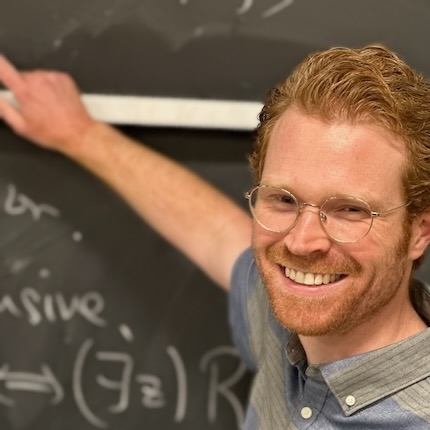


In 6 years as a UCLA math instructor, Tyler Arant has taught students ranging from freshmen to graduate students, and classes from calculus and probability through to algebra and analysis. He received his PhD from UCLA, and his BS in mathematics from UC Berkeley. His research is about the intersection of computability theory and descriptive set theory. He is one of the department’s most lauded instructors, including receiving the Liggett Teaching Award in 2022. In the classroom, he strives to combine mathematical rigor, deep understanding of the obstacles to learning, and activities and differentiated materials that provide challenge and interest to all students.
Pre-College Summer Institute
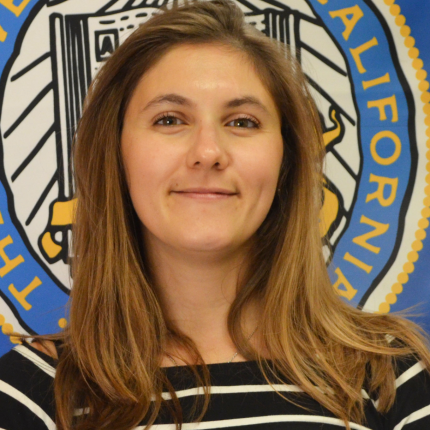
Elisa Negrini is an Assistant Adjunct Professor at UCLA who received her PhD from Worcester Polytechnic Institute in Applied Mathematics. Dr. Negrini is passionate about teaching both lower and upper division classes with her favorites being Differential Equations and Numerical Methods classes. Her research focuses on deep learning algorithms for forward and inverse problems for partial differential equations and optimal transport. In her free time Dr. Negrini enjoys rock climbing and backpacking.
Math 151A
Jukka Keränen received his bachelors degree from Princeton University, a masters degree in mathematics from Cambridge University, a PhD degree in philosophy of mathematics from the University of Pittsburgh, and a PhD degree in mathematics from UCLA. In addition to his research work in philosophy and number theory, Jukka has a deep passion for teaching. He was involved in developing an innovative introductory course on mathematical modeling aimed at life sciences majors; due to its impact on STEM retention, this course has been featured in numerous publications, including Scientific American. His work in teaching has been recognized by multiple awards, including the prestigious My Last Lecture award. When not thinking about math or philosophy, Jukka likes to run and build LEGO (though usually not at the same time).
Math 31A and Math 106
Marcus Roper is a Professor of Mathematics and Computational Medicine. Prior to joining the UCLA faculty in 2011, he received BA and MMath degrees in Mathematics from Cambridge University and a PhD in Applied Math from Harvard University. His research work on blood flows in mammal brains, the dispersal of fungal spores, and the intelligence of slime molds and has been featured by the NY Times and Scientific American. He particularly relishes teaching introductory classes; he co-wrote a popular textbook for life science students learning calculus and won the Sorgenfrey Distinguished Teaching Award in 2019. In his spare time, he teaches classes for the Olga Radko Endowed Math Circle.
Math 33B and Pre-College Summer Institute